Trump's policies echo what Democrats themselves once supported, which highlights just how far the opposition has drifted from reality. While they chase academic theories and ideological purity tests, Trump is focused on practical outcomes that directly impact Americans’ everyday lives.
https://quoththeraven.substack.com/p/decisive-leadership-in-an-age-of
Decisive Leadership In An Age of Decline
Trump's first year: heavy handed, but getting things done. I'll take it.
All things being equal, I think President Trump is doing a damn good job his first year in office. Sure, there are things that I could choose to take exception with — not cutting as much spending as anticipated or dangerous ideas involving stablecoins in the Treasury market, for example — but all in all, Trump is getting the big things right.
Every once in a while, I check in on the Democrats to see if they have somehow organically manifested one new brain cell while they just sleep, lobotomized and Matrix-pod style, in the liquid goo of groupthink, identity politics, race hustling, “academic” theories, and post-post-post-postmodern ideologies (the fourth post just kills you)—and I’m quickly assured that they have made no progress whatsoever.
For example, here’s Congresswoman Jasmine Crockett stating just days ago that just because somebody commits a crime, it doesn’t make them a criminal, while her yoga teacher nods along in deep agreement as though she has just presented a breakthrough in differential geometry at MIT and he’s in the class following along, taking notes.
And then there was Senator Mazie Hirono’s line of questioning to FBI Director Kash Patel days ago, where she was incensed that FBI agents — supposed to be the “tip of the spear” in fighting terrorism — were required to do pull-ups.
And how about Jake Tapper interviewing himself Hakeem Jeffries about the current government shutdown due to Democrats seeking to offer medical care to illegal immigrants?
I also watch the people who appear one after the other on MSNBC to claim that arresting criminals is somehow racist—like this guy:
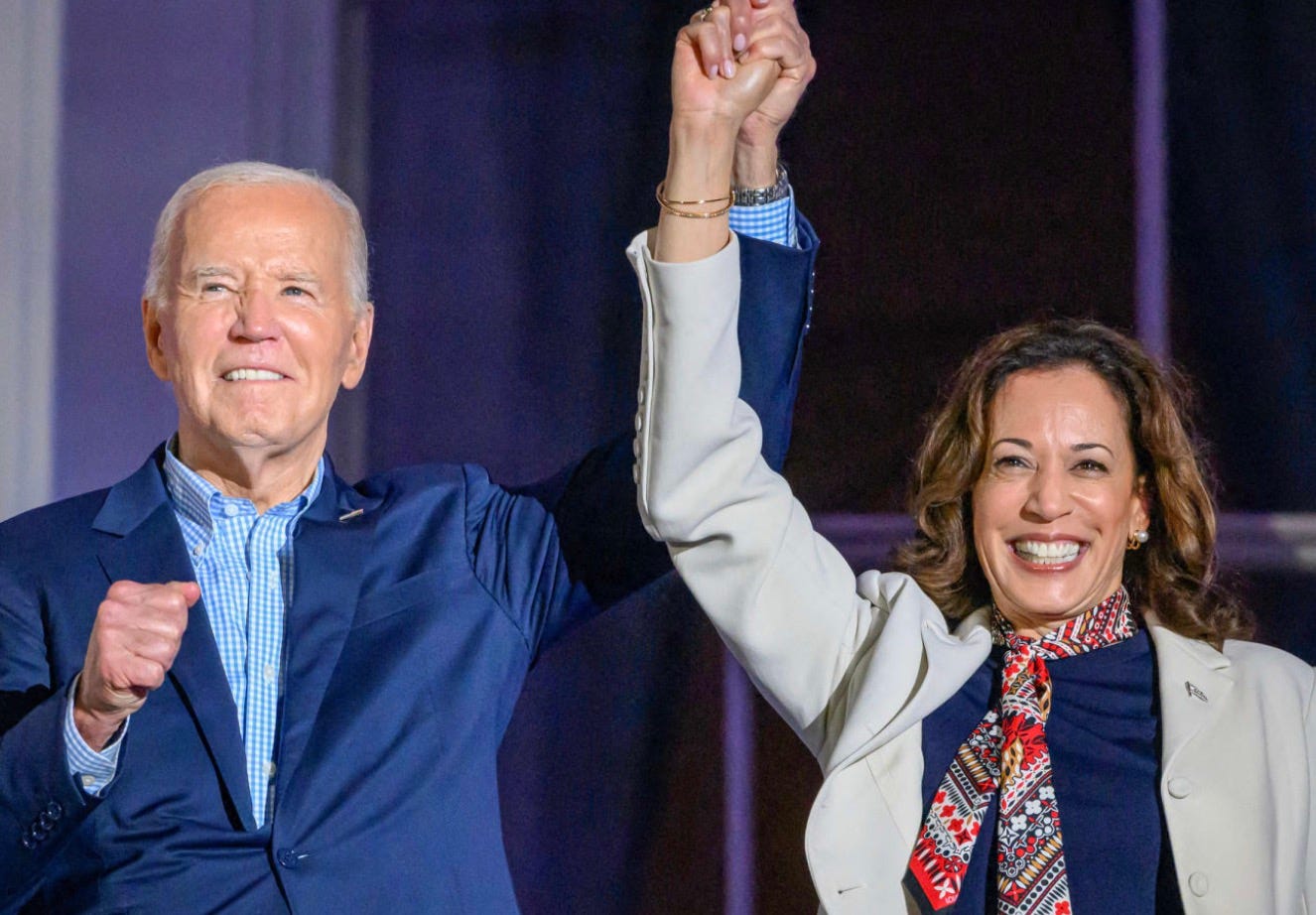
And in case you’re wondering how Kamala Harris is doing after receiving the curb-stomping of the century in the presidential election, she has also resurfaced, eager to prove that she appears to still have an affinity for both word salads and red wine.
Yes, I look at these examples and scores of other ones.
I watch all of this and think to myself, “Things could have been way, way worse.”
One of the main arguments against President Trump so far during his term has been that he has been acting with a heavy hand. This was the critique with DOGE, it was the critique with his appointees, it was the critique with tariffs, it’s been the critique with him speaking out about James Comey’s indictment, and it has definitely been the critique with how he is handling illegal immigration.
But honestly, the country had gotten so far off track in the four years prior to this term that any pushback from the above idiocy was going to feel heavy-handed.
How exactly is Trump supposed to respond to Joe Biden’s head of nuclear waste being a bald man wearing lipstick in a dress, stealing luggage from women at airports? Is Trump supposed to say, “This is completely normal behavior!” or “Great job, can we keep him on for another term?”

How is Trump supposed to look at millions of illegals being allowed to cross the border with zero repercussion—many of whom are unvetted criminals—and respond?
Is he supposed to throw Alejandro Mayorkas a testimonial dinner for repeatedly lying in front of Congress with a smirk while knowingly keeping the country’s borders open?
And how exactly is Trump supposed to tackle the problem of crime in major cities and drugs and homelessness ravaging Washington, D.C.? Is he supposed to kick back in his chair and act as though everything’s fine?
You can hem and haw all you’d like about his companies’ bankruptcies in the past, but the point is Trump is a “get-shit-done” kind of person, even if it is with a heavy hand.
Even the worst that the private sector business world has to offer is millions of times more efficient than bureaucrats in government who have no idea how the free market rewards results. If Trump wakes up at 6 a.m. and goes to bed at midnight every day and only spends 2 of those 18 hours making swift, decisive decisions about getting things done while spending the rest watching Fox News and battling with the press, his days will likely still be 100 times more productive than Joe “6 Handicap” Biden’s or Kamala “Unburdened From What Has Been” Harris’ would be.
I once saw a documentary where Trump was talking to one of his workers at his golf course in Turnberry, Scotland while they were working on it. He was having a back-and-forth with someone that was helping him design a golf course, and at some point Trump just pleaded with his employee to stay out of the way of people who were getting things done. The employee had a gripe about something small on the course or how something was being done, and Trump’s message to him was: if the project is moving forward, then don’t rock the boat. He’s results-driven.
Yes, Trump’s decisions may not always be perfect, but that is superseded by his ability to take swift corrective actions at a time when the nation desperately needs it most.
Was his formula for figuring out tariffs for other countries nuanced and carefully done? Probably not. But did it get the attention of the world and send a broader message that the United States is actively reevaluating its trade deficit? It sure as hell did.
Is Immigration and Customs coming down with a heavy hand on illegal immigration? Yes, they are. But is that sending a message to future illegal immigrants and ones that are still here? Yes it is.
And is Trump’s decisive action to battle crime in inner cities with a heavy hand sending a message about his expectations for law and order? You’re damn right it is. The message is “the bullshit stops today” — and it’s a message our inner cities have needed to hear since the “Summer of Love” riots in 2020.
One only needs to do a precursory Google search online to find that many of the policy positions Trump has put in place are ones that Democrats would have approved of in the ’90s or early 2000s. I see countless clips surfacing of Joe Biden, Hillary Clinton, Barack Obama, and even Chuck Schumer talking about how illegal immigrants don’t belong in the country — and how we need a secure border:
Odd. It seemed pretty simple for them to understand a decade or two ago, but perhaps this was before the party had engineered a plan to try and use said immigrants to tip the scales of elections, or before we learned we are all racists without even knowing it.
There’s also been critiques about the Trump administration taking equity stakes in public companies. I’m constantly being flamed by people telling me I’m supporting socialism because I own Intel and other companies that I think the administration might invest in.
To be truthful, I see their point about socialism. But the Trump administration isn’t ultimately looking for a state-planned, socialist economy—it’s trying to protect and call attention to the assets the United States does have and will need to rid itself of dependence on foreign nations. It would be a different story if the United States wasn’t in such a precarious position in relying on the rest of the world to provide us with the things that we desperately need to maintain our quality of life and national defense.
Is it a heavy-handed approach? Again, a little bit. But do the ends justify the means if companies like Intel—now potentially paired with some of the biggest names in the world in semiconductors—become technological staples in the United States so we don’t have to rely on other countries? Sure.
I’ve been saying for years that the pandemic exposed our reliance on other countries, specifically China. The Trump administration is looking at the industries most critical to national security and is trying to ensure their success and survival.
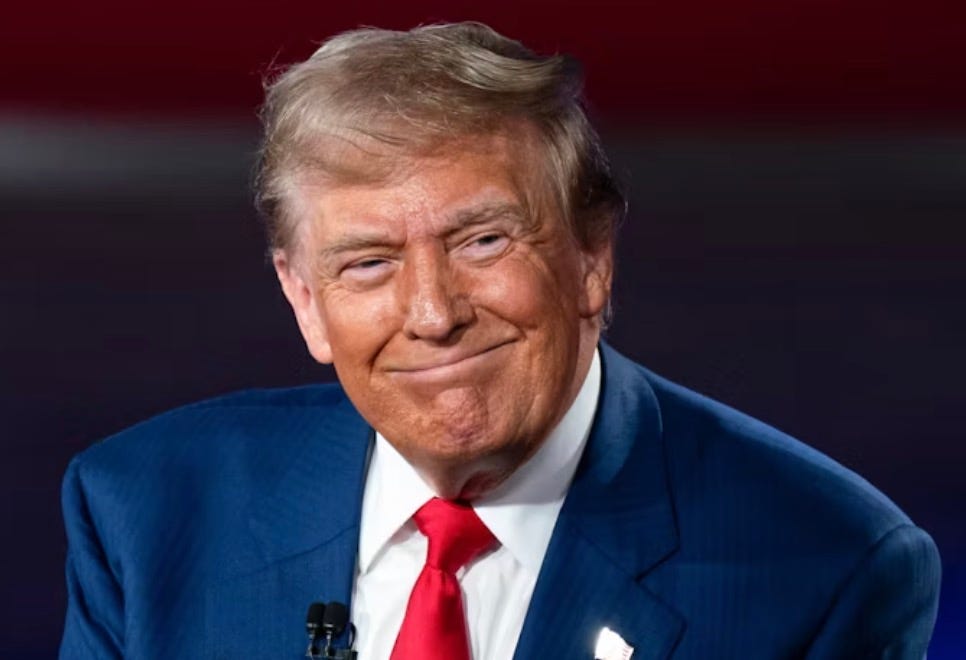
At the end of the day, what matters most is not whether President Trump has been flawless in his first year in office, but whether he has been effective in steering the country back toward stability, sovereignty, and common sense. The answer to that, in my opinion, is yes.
His willingness to confront uncomfortable truths—whether about immigration, crime, or foreign dependence—shows a level of courage that has been missing in Washington for decades. The heavy-handedness that critics point to is not the sign of recklessness, fascism, white supremacy, colonialism, Project 2025, climate change or whatever progressive talking points claim this week, but instead it’s the natural outcome of a leader who refuses to accept decline as the new normal.
Criticism will always come, especially from political opponents and the media, but leadership is not about pleasing everyone—it’s about setting a course and holding firm when the inevitable resistance comes.
Trump’s approach may ruffle feathers, but it’s also forcing conversations that need to happen. It’s not enough to nod along politely while the country crumbles under bad policy like President Autopen did for four years; someone has to make bold choices and demand accountability, even when it isn’t popular.
Looking at the big picture, Trump’s first year demonstrates that he is not only capable of making those choices but also committed to doing so consistently. The fact that his policies echo what Democrats themselves once supported highlights just how far the opposition has drifted from reality. While they chase academic theories and ideological purity tests, Trump is focused on practical outcomes that directly impact Americans’ everyday lives.


